Breath, Posture & Pain
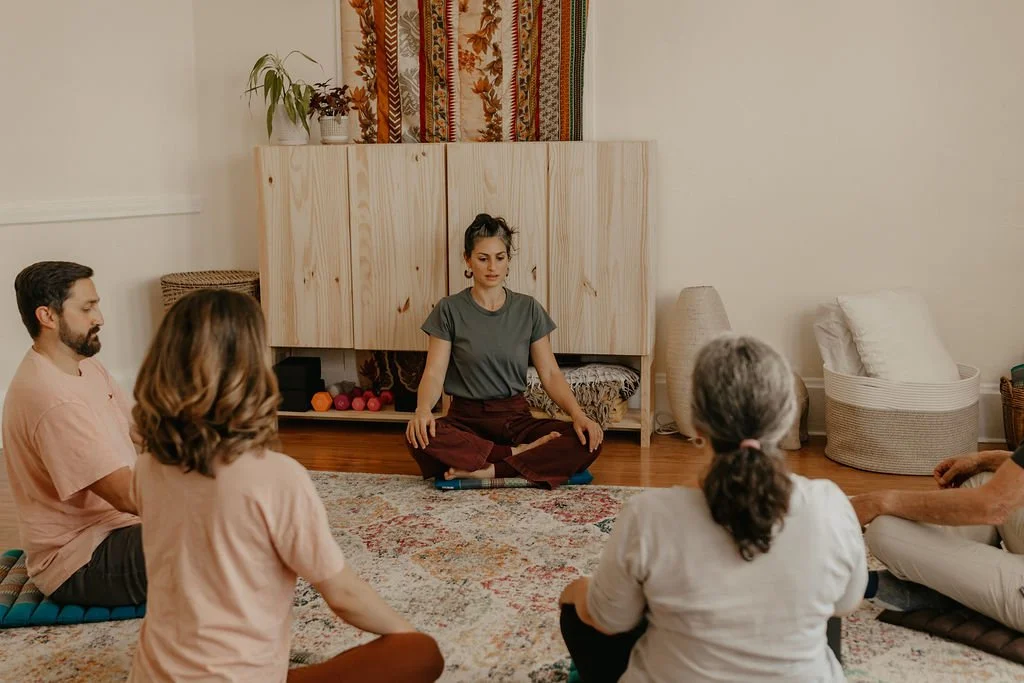
The breath nourishes and regulates all movement in the body, from the largest, most obvious and external to the smallest, most subtle and internal. Breathing happens automatically. And, it is one of the few autonomic processes that can be practiced, regulated, shaped.
How we breathe determines how we move and how we move determines our posture. Likewise, our posture determines how we move and how we breathe. Many people think of posture as static and rigid – as a mold.
But, posture is relational to our internal integrity and to external forces. From the inside, the breath creates the space and the pressure needed for our structures – bones, tissues, organs – to align.
When we can align, we can move with strength and ease. I have often said, with good posture, you can do anything! This is because movement is informed by structure and structure is informed by movement. The breath is movement.
My teacher (as well as many others in traditional eastern systems) has said: if one can establish the breath within the body, one doesn’t need to worry about posture at all.The better we breathe, the better we can align and the more ease we will find in both breathing and in moving, which are the antidote to pain. It's a beneficial feedback loop.
However, the loop circles the other opposite way as well. If we don’t move and we don’t engage the breath in it’s fullest capacity, we lose the space and the pressure the breath creates. Our structures become unorganized and gravity becomes a detrimental force to our bodies rather than a positive force. We will experience pain.
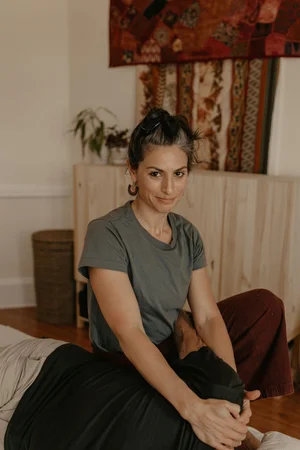
Commonly, when treating someone who is has experienced pain consistently over a period of time, their reaction to any change in the body that occurs through treatment — positioning, movement, loosening of constrictions — is to hold their breath, tensing everything, freezing in place. This is a protective mechanism, but it doesn’t make the pain go away. In fact, it makes it worse.
Pain originates from lack of movement, whether that lack of movement looks like a systemic lack of inhabiting the body’s full range and planes or whether that lack of movement is simply a constrained pattern of isolated, repetitive movement.
When the breath can inhabit the body fully, filling the space of the three lobes of each lung like a string of balloons, the crown of our heads automatically lift upward and the curves of our spine automatically align as our feet press into the ground. Over time, what needs to soften will soften and what needs support will receive support. Pain will dissipate and movement will become natural.